

Tigua Ysleta Del Sur Pueblo Clinic Project by Over the Top Terrazzo Wins NTMA Honor Award
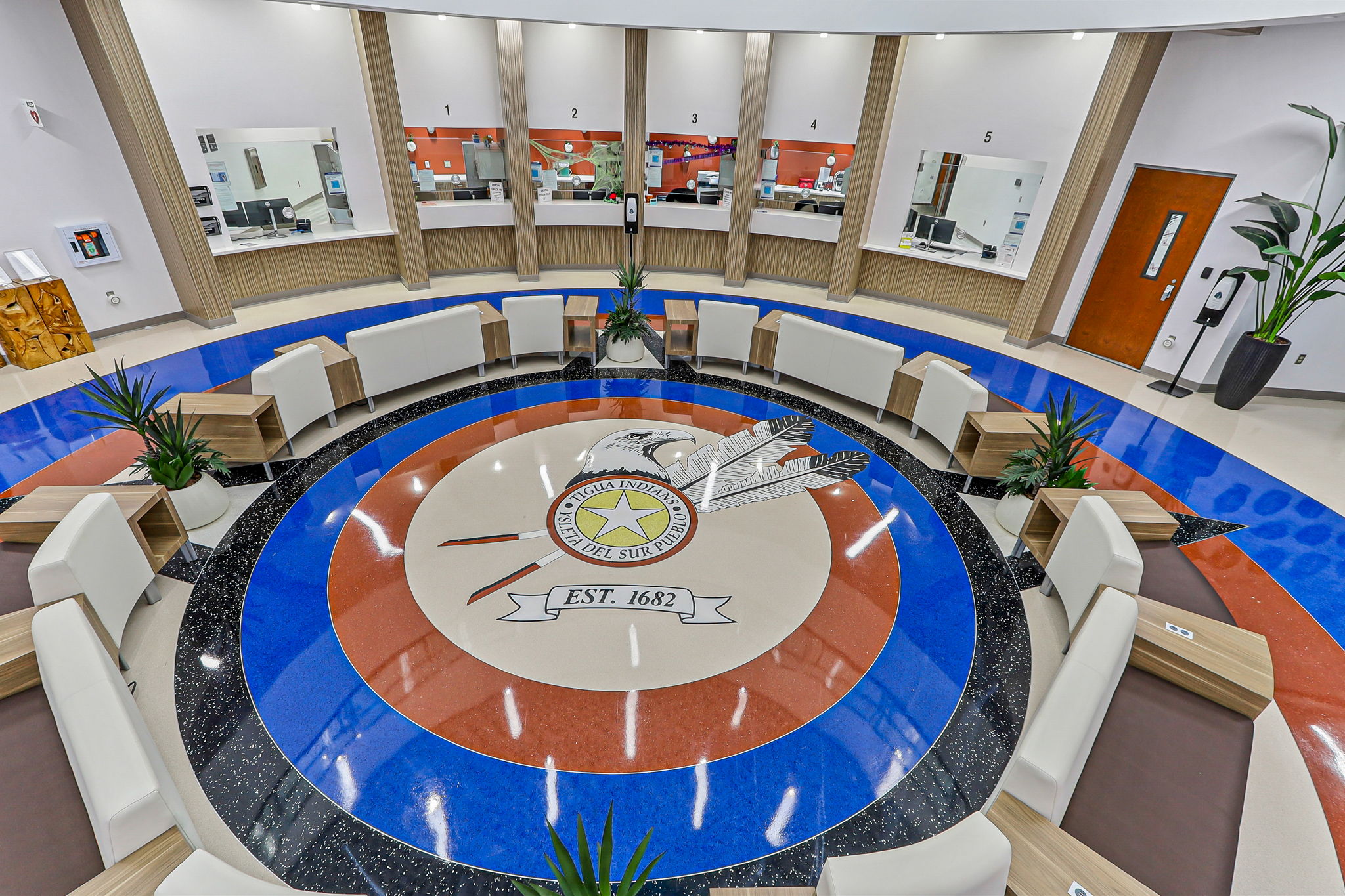
At Ysleta Del Sur Pueblo Clinic in El Paso, Texas, the terrazzo floor, with its custom eagle medallion, gained national recognition for Over the Top Terrazzo company of El Monte, Calif. © Marco Munoz
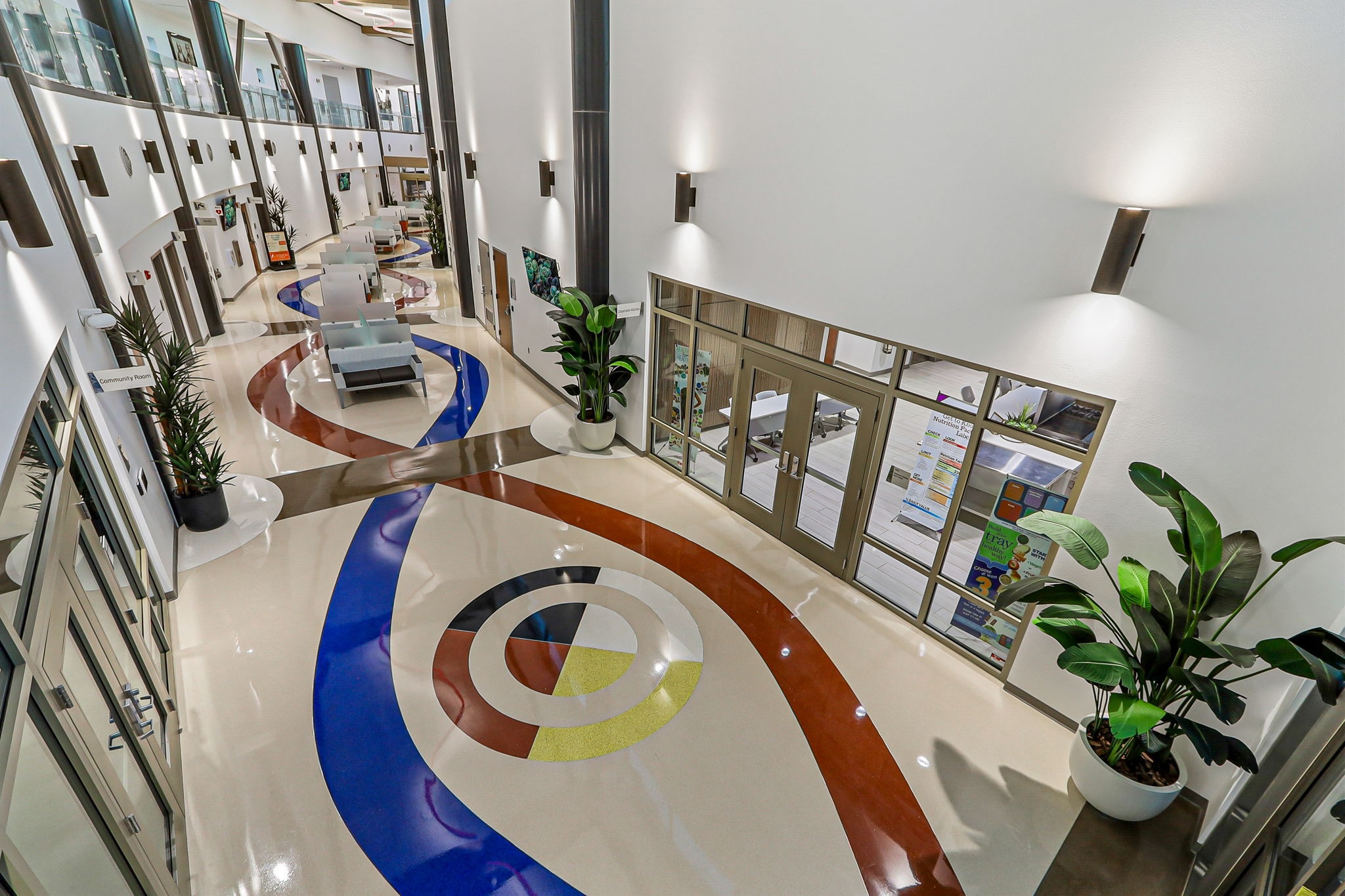
Tigua Indian community members collaborated with the architect, Carl Daniel of El Paso, and Over the Top Terrazzo to develop the clinic's award-winning interior design.
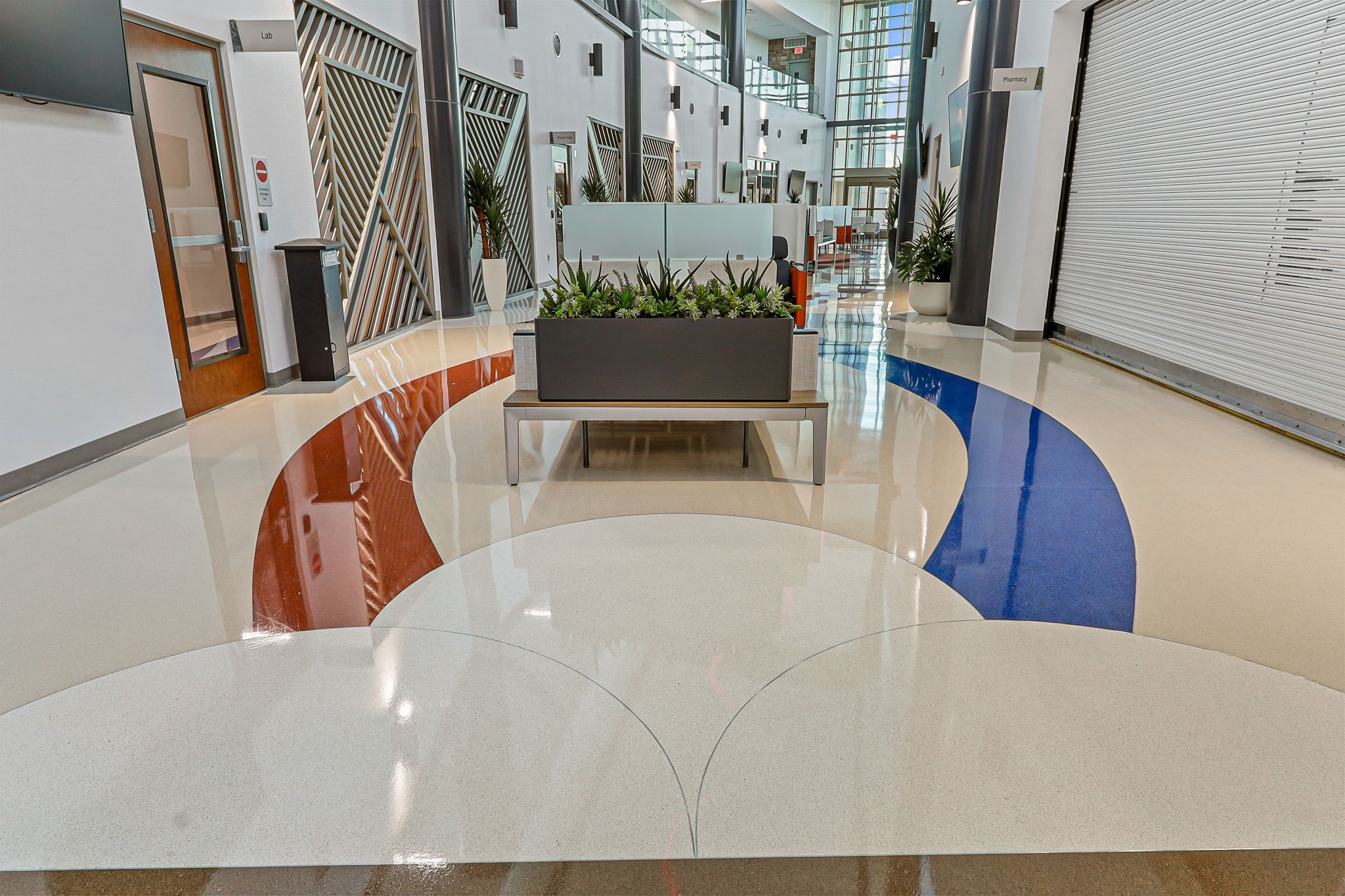
Cultural identity of the Tigua Indian community shaped the symbolism in the interior design of the new community clinic.
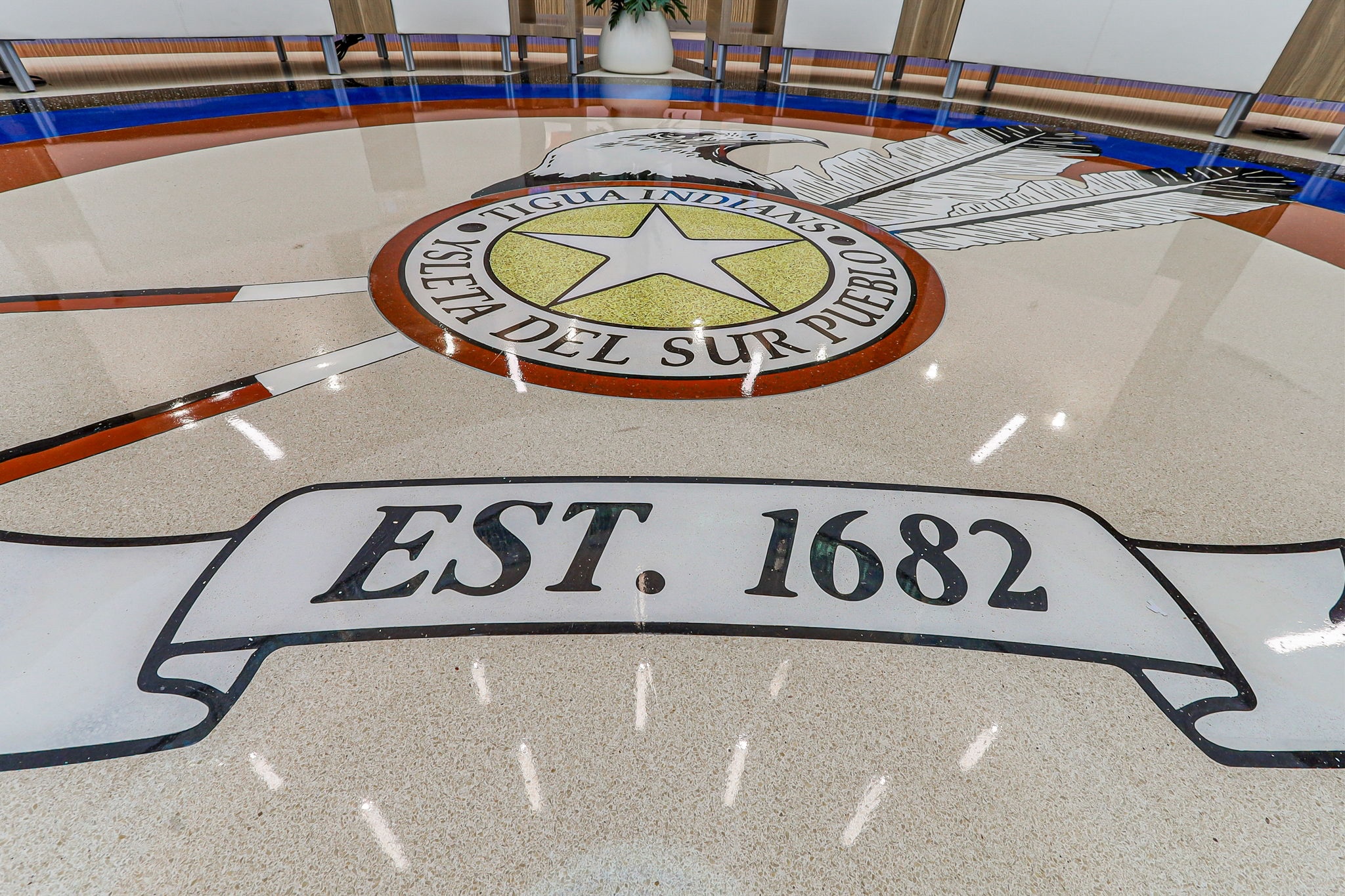
The Tigua Indian community's new medical facility reflects the tribe's history and identity as one of the oldest continuously inhabited settlements in the United States.
National Terrazzo & Mosaic Association Honor Award recognizes a seven-color eagle medallion inspired by 300 years of Tigua history.
Established in 1682, the Tigua Indian community of El Paso is one of the oldest continuously inhabited settlements in the United States. When local architect Carl Daniel of Carl Daniel Architects began designing the tribe's new medical facility, the central question was not just about function, but representation: how to reflect a living cultural identity in the built environment?
The Challenge: Making Culture Visible
Mr. Daniel knew early on that the atrium floor would be where that question would be answered. "Early in the preliminary design, we decided to use terrazzo in the main atrium: number one because it's beautiful, and number two because of its wearability under high traffic," he explained. "It will still be there when the building falls down."
Performance was only part of the equation. The greater challenge was meaning—translating a rich visual tradition with fidelity and without reducing it to ornament.
Terrazzo provided the necessary control. "The tribal designs are so colorful. Terrazzo was perfect for this project with its unlimited colors, shapes, and designs. If you can draw it, these guys can build it," Mr. Daniel stated. "It was a canvas for us to use on the floor, and it's a real showpiece."
The Tribe Shapes the Vision
Before design work began, the architecture team met with tribal members, reviewed early concepts, and incorporated direct feedback. "We developed a design of a river flowing through the atrium, and then we incorporated their input to modify it," Mr. Daniel reported. The collaboration shaped the imagery, steering it toward symbols with cultural meaning for the tribe.
Over the Top Terrazzo matched the project's ambitions at every turn, Mr. Daniel recounted. "They drove to the job site from California, brought us four-by-four and four-by-eight samples for our review, and went back and adjusted them. They were a pleasure to work with.”
The result is a seven-color floor anchored by a custom eagle medallion, a form rooted in symbolism, and scaled precisely to the atrium. Bands of color frame the medallion and guide circulation through the space.
The black elements of the eagle imagery were waterjet-cut from Absolute Black granite at 65,000 PSI, directly from the CAD drawing. Finer details were etched into gray granite by hand-cutting resistant masking tape and sandblasting the exposed areas, to contrast polished and textured surfaces. Both were then set into a hand-poured terrazzo field, requiring tight tolerances during on-site casting and grinding. The floor was polished to 1500 grit for a high sheen. For the clinic's interior design, CDA Architects also received the Jury Prize at the AIA El Paso Chapter's 2023–2024 Design Awards.
In addition to this project, Over the Top Terrazzo received a second NTMA 2026 Honor Award, among the 17 winning projects submitted by NTMA member contractors, for a residential installation in Sierra Towers in West Hollywood. The company was established in 2008.
About the National Terrazzo & Mosaic Association
The annual NTMA Honor Awards recognize outstanding terrazzo installations completed by association member contractors. Entries are evaluated on design achievement, craftsmanship, and technical execution. A full list of this year's Honor Award recipients is available at ntma.com.
Founded in 1923, the NTMA is a nonprofit trade association of over 150 contractor and supplier members, headquartered in Fredericksburg, Texas. The organization establishes national standards for all terrazzo systems and applications, advancing quality craftsmanship and innovation while supporting its members in the trade.
The NTMA provides a broad range of free resources for architects, designers, artists, contractors, maintenance professionals, and property owners. From assisting design teams with specifications to offering technical guidance throughout a project, the NTMA helps ensure terrazzo installations meet the highest standards. The association also offers AIA-registered continuing education programs for architects and design professionals. For more information about terrazzo resources, visit ntma.com. Technical Director Gary French is available at gary@ntma.com.
Terrazzo originated in 15th-century Italy, building on the mosaic traditions of ancient Rome. Venetian marble workers repurposed discarded stone chips into durable, decorative surfaces—a practice that made terrazzo an early sustainable material. Today, terrazzo is still poured by hand on-site, with options for precast panels and waterjet-cut details. Stone, recycled glass, or other aggregates—which may be locally sourced—are set in a cement or epoxy base, and the surface is then polished to reveal the aggregate's color and texture. Valued for its design versatility, ease of maintenance, durability, sustainability, and lifecycle value, terrazzo is built to last the life of a building.
Chad Rakow
National Terrazzo & Mosaic Association
+1 800-323-9736
info@ntma.com
Visit us on social media:
LinkedIn
Instagram
Facebook
YouTube
TikTok
National Terrazzo & Mosaic Association 2026 Honor Awards
Legal Disclaimer:
EIN Presswire provides this news content "as is" without warranty of any kind. We do not accept any responsibility or liability for the accuracy, content, images, videos, licenses, completeness, legality, or reliability of the information contained in this article. If you have any complaints or copyright issues related to this article, kindly contact the author above.
